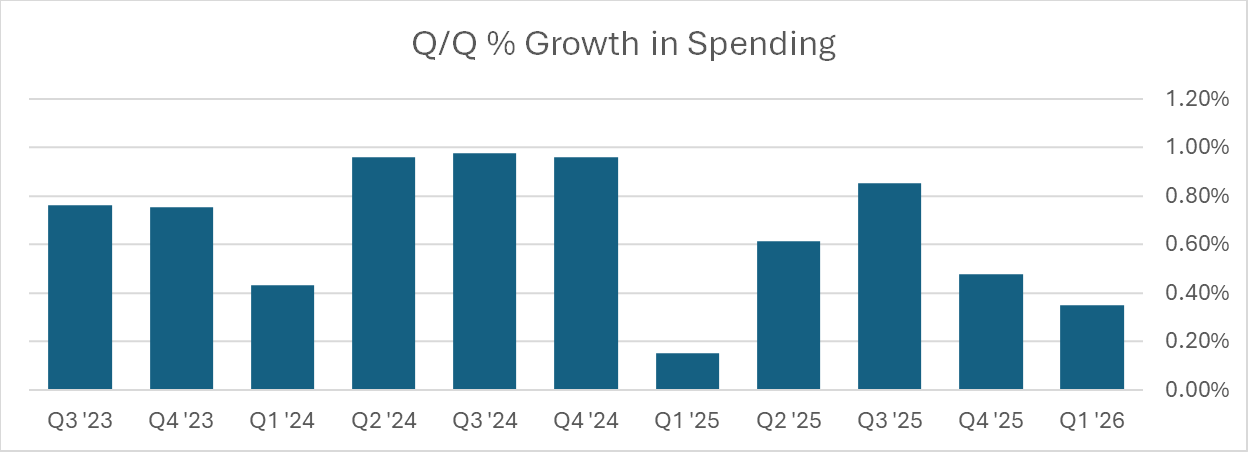
Source: FactSet
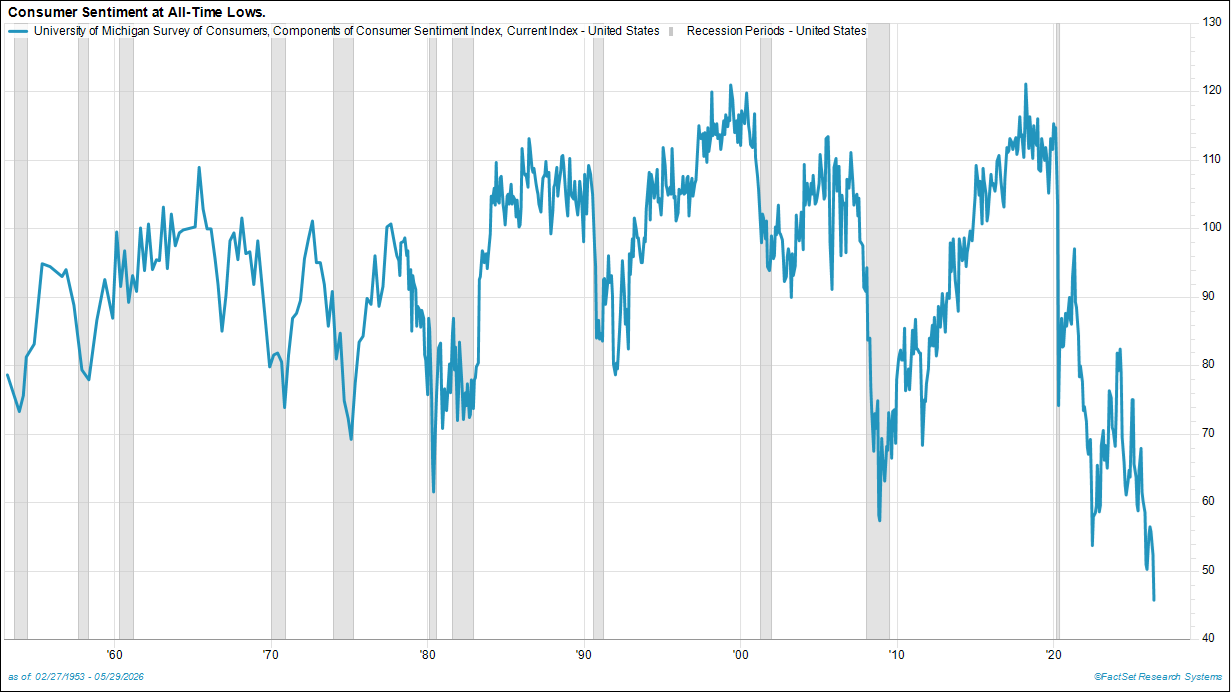
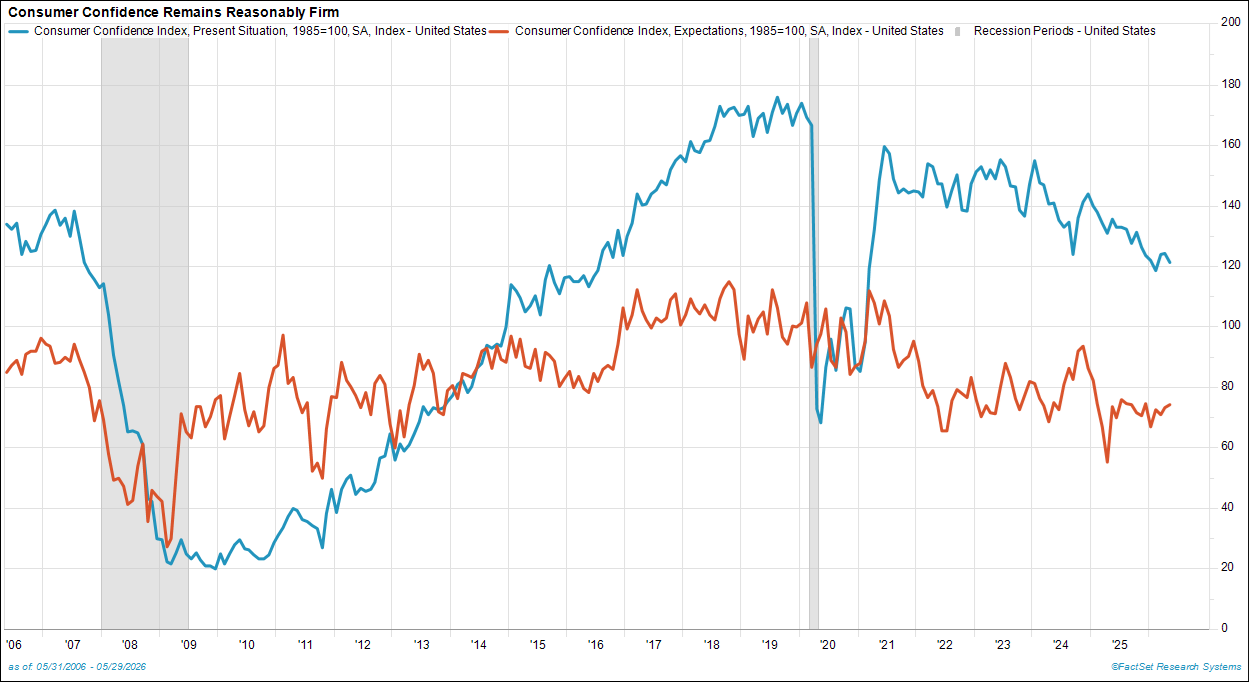
Consumers are, however, worried about the future. Future expectations are lower than their current situation, but this isn’t unusual, as this has been the case rather consistently over the last 10 years. I believe both the sentiment and confidence surveys need attention. While the sentiment survey is softer in the outcome, those sentiments reflecting consumer worry need to be addressed.
There are two factors which I believe are playing into the sentiment survey and aren’t necessarily included in the “Present Situation” outcome of the confidence index. Those two factors are:
- The political divide in the country where, according to a Gallup poll taken in 2024, 80% of U.S. adults believe the country is highly polarized.1 Separately, a Pew Research Center study found that 72% of Republicans and 63% of Democrats think members of the opposing party to be “more immoral” than most Americans.2 American consumers understand the political divide in the country and are worried about this political split.
- According to a report in the May 23 Wall Street Journal, Robert Barbera, former economist from Johns Hopkins, suggests artificial intelligence (AI) may help explain why consumer sentiment remains weak and consumers are in a nasty mood, despite the strength in the economy (and stock prices).3
AI may weigh on consumer sentiment
Let’s focus on the second bullet above: massive amounts of capital are being spent to develop and install AI capabilities. Many reports suggest that AI promises to boost worker productivity growth rates, but consumers by and large are worried about what path that productivity improvement takes. Will it cost them their jobs?
Headlines abound about how many of us may wind up unemployed as AI takes form and our employers deploy these computer-based models, which we all hope will make us work smarter but not eliminate our jobs. These factors play into the sentiment index and not directly into the confidence survey.
This dichotomy is also reflected in the stock market, which recently has been setting new highs. The market has been highly focused on AI deployment leading to enhanced worker productivity.
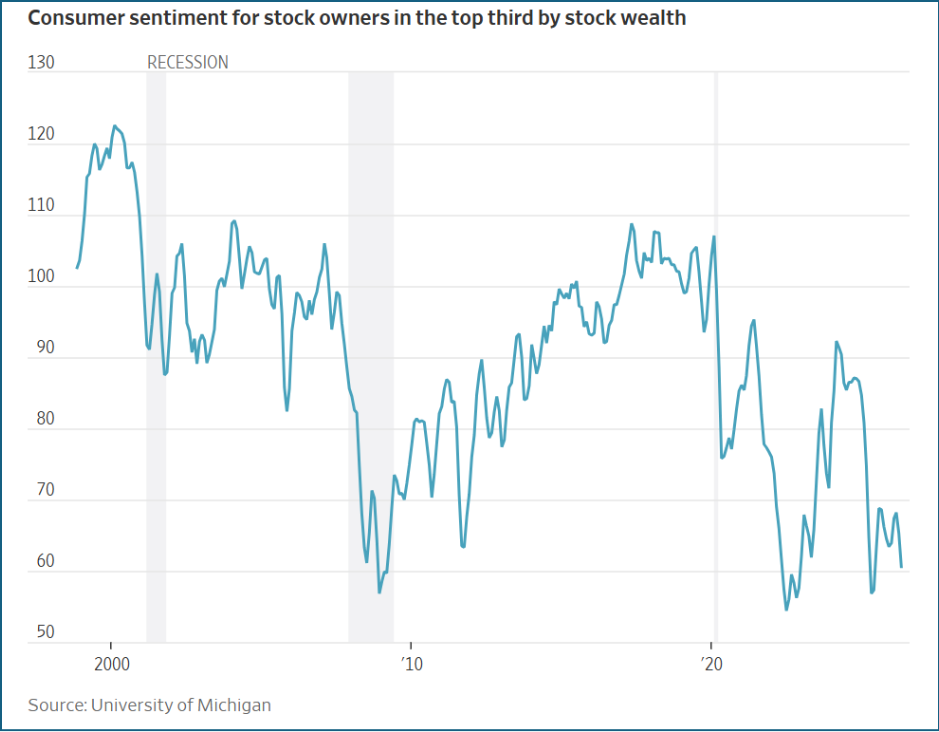
That said, the University of Michigan survey released their finding that folks who own stocks aren’t as negatively biased as those who don’t. Sentiment of consumers who own stocks is a reading of slightly above 60 (chart below) while in total, the index is now at 45 (first chart).